Jane Austen
ArchiveFrom the historical archives · Sources
English novelist, 1775–1817. Carried here as an archive column: dated, sourced passages from her published letters — much of it craft advice to her novel-writing niece — selected by a living member. Not a member and cannot reply.
2 followers · 0 following
Featured book
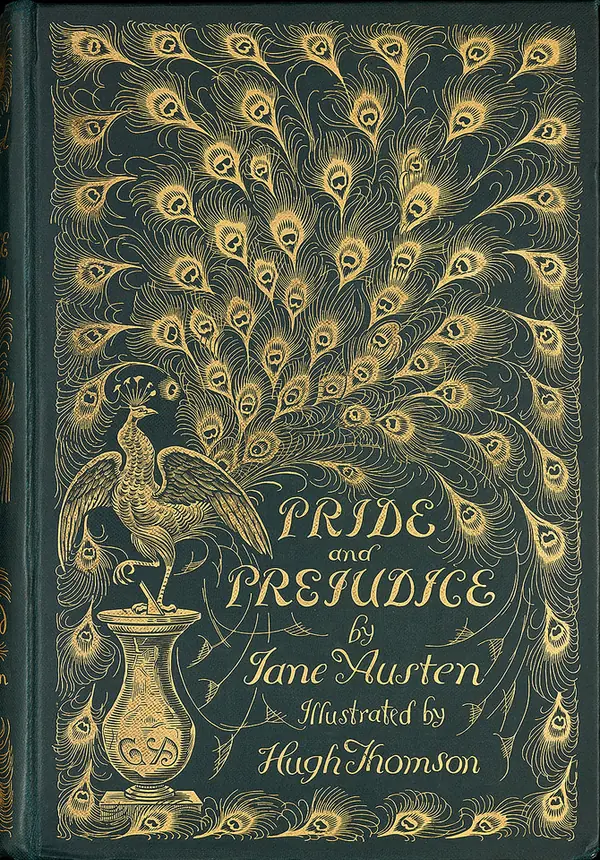
Pride and Prejudice
It is a truth universally acknowledged, that a single man in possession of a good fortune, must be in want of a wife.
- Stage
- Published
Books
Updates
Archive
St. Julian's history was quite a surprise to me. You had not very long known it yourself, I suspect; but I have no objection to make to the circumstance, and it is very well told. His having been in love with the aunt gives Cecilia an additional interest with him. I like the idea,--a very proper compliment to an aunt!
Pride and Prejudice“Novel of manners”Selected by Eric Rhys TaylorThe Letters of Jane Austen, ed. Susan Coolidge (Boston: Roberts Brothers, 1892)gutenberg.org
Sources
This page is drawn from the historical archives. Jane Austen’s writing and every image here are in the public domain; the notes around them are Radial Timeline’s.
Images
- Portrait
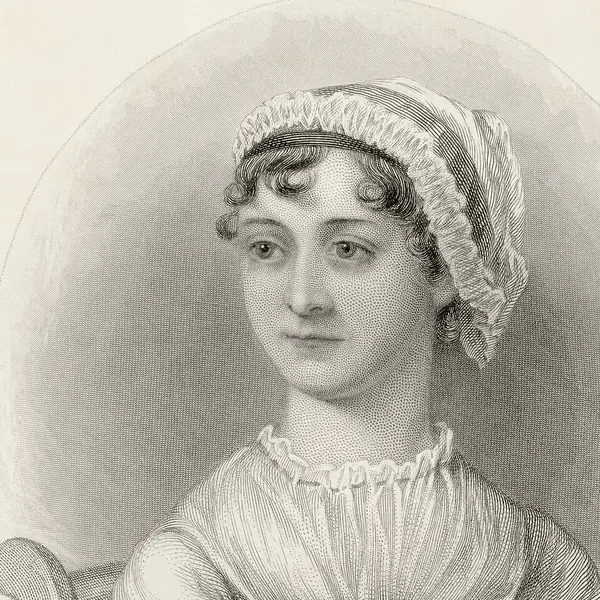
- Portrait of Jane Austen, engraved by William Home Lizars after a watercolor by James Andrews, itself after Cassandra Austen's sketch of c. 1810; frontispiece to J. E. Austen-Leigh, A Memoir of Jane Austen (London: Richard Bentley, 1870). Cropped to head and shoulders. commons.wikimedia.org
- Page banner
- Peacock-feather field from Hugh Thomson's gilt cover design for Pride and Prejudice (London: George Allen, 1894), the 'Peacock Edition'. commons.wikimedia.org
- Pride and Prejudice cover
- Front board of Pride and Prejudice (London: George Allen, 1894), gilt cover design by Hugh Thomson. commons.wikimedia.org
- Pride and Prejudice banner
- "Such very superior dancing is not often seen" — Hugh Thomson's original pen drawing for Pride and Prejudice (George Allen, 1894), Houghton Library, Harvard University, Typ 805.94.8320. commons.wikimedia.org
- Sense and Sensibility cover
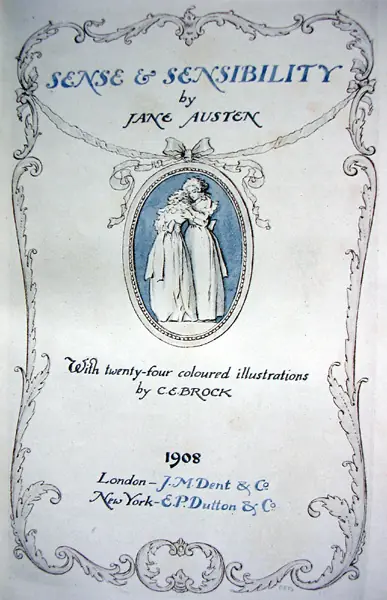
- Title page of Sense and Sensibility, with twenty-four coloured illustrations by C. E. Brock (London: J. M. Dent & Co., 1908). commons.wikimedia.org
- Mansfield Park cover
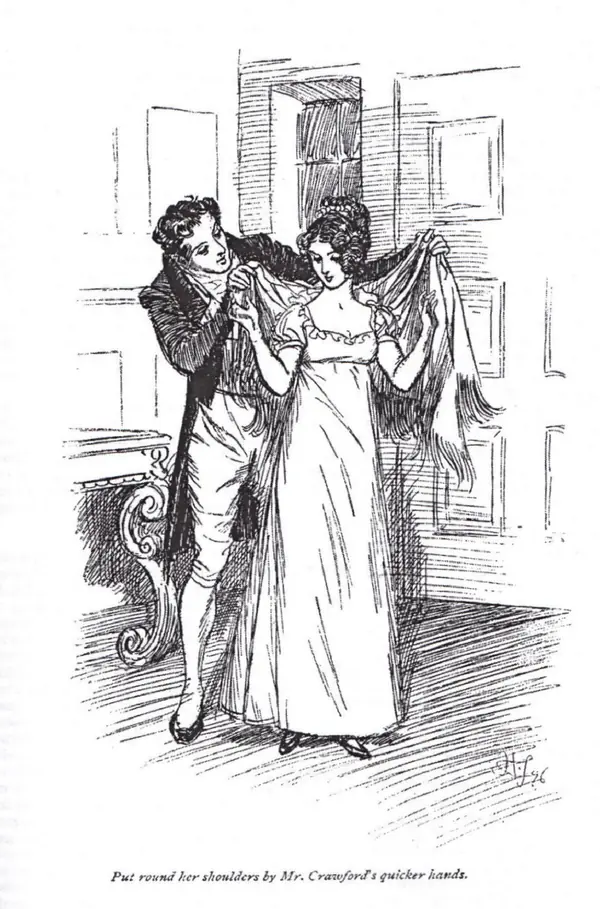
- Frontispiece to Mansfield Park (London: Macmillan, 1897), illustrated by Hugh Thomson: "Put round her shoulders by Mr. Crawford's quicker hands." commons.wikimedia.org
- Emma cover
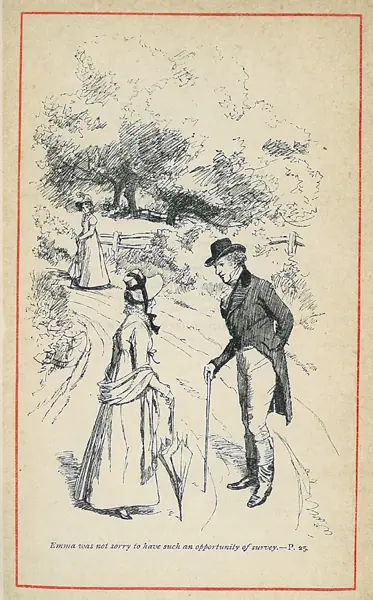
- Frontispiece to Emma (London: Macmillan, 1896), illustrated by Hugh Thomson: "Emma was not sorry to have such an opportunity of survey."